
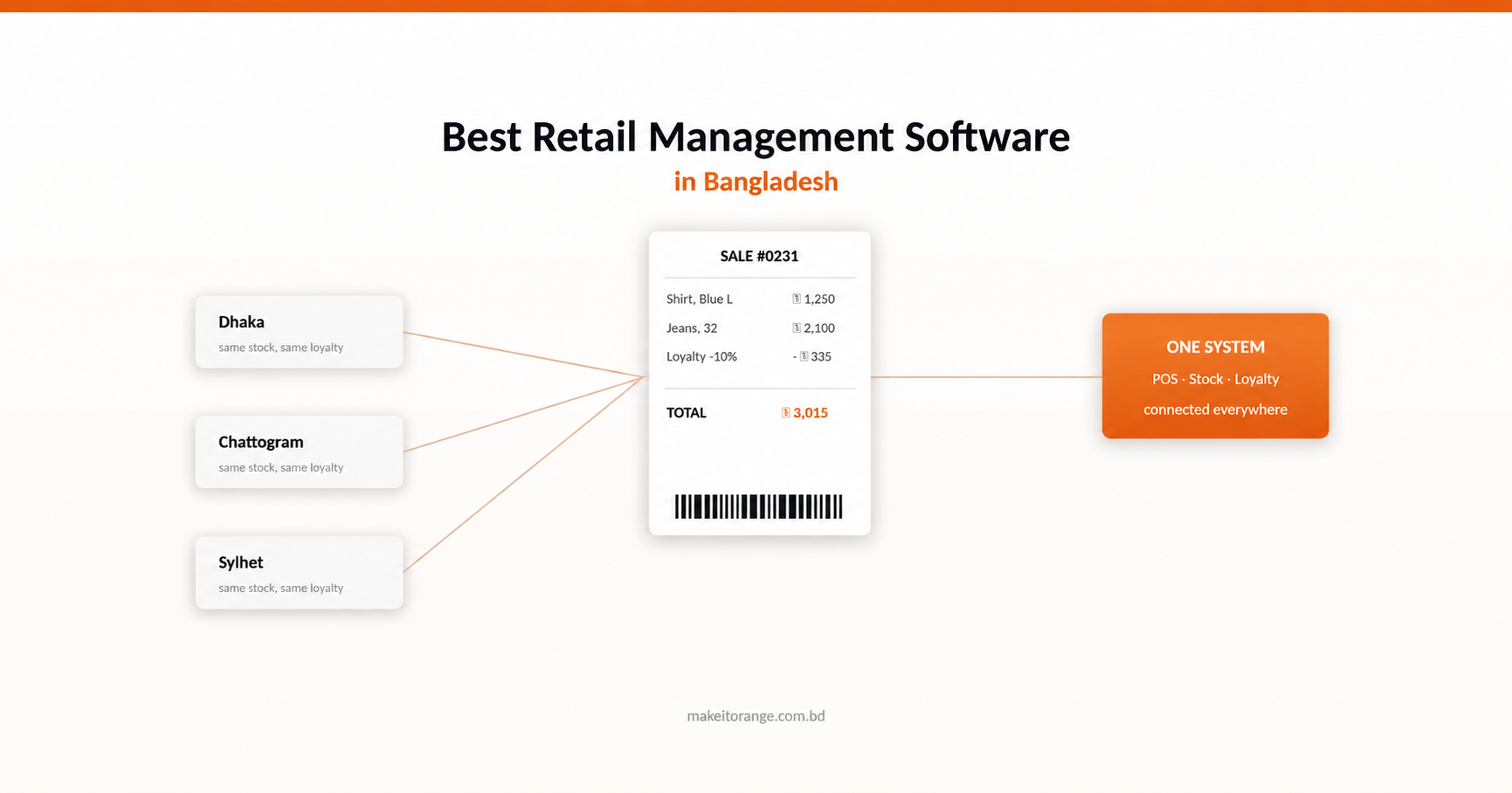
Best Retail Management Software in Bangladesh for Fewer Errors, Happier Customers
Key takeaways
- Retail management software connects POS, inventory, and pricing into one system; the real test is whether a sale automatically updates stock and pricing everywhere, not just at one till.
- Pricing typically runs ৳1,000–5,000/month for a cloud subscription, or from ৳10,000 for a one-time license, and enterprise or multi-branch deployments can exceed ৳2,00,000; biznify is the only vendor here with fully published pricing.
- Deployment and offline behavior vary meaningfully by vendor: ZAB Retail and PridePOS both have confirmed offline-and-online mode; the rest either don't state this or advertise it only for some configurations.
- Retail ERP software and retail management software are largely the same category in this market, most vendors use both terms to describe the same connected system.
There is no single best retail management software in Bangladesh, the right choice depends on your business type, how many branches you run, and how much you need offline reliability at the checkout counter. For most Bangladeshi retail businesses, ZAB Retail by Orange Solutions is the strongest overall choice, because it connects point-of-sale, inventory, pricing, supply chain, and customer loyalty into one system, with confirmed offline and online modes.
What does retail management software actually need to do?
Retail management software connects point-of-sale, inventory, pricing, and customer data into one system, so a sale at the counter updates stock automatically, pricing stays consistent across every branch, and a customer's loyalty history is visible wherever they shop, not tracked separately in a spreadsheet or a notebook. In Bangladesh, this typically means POS billing, inventory management, and basic reporting as a connected minimum, with pricing/promotion management, supply chain, and loyalty programs as common additions for growing or multi-branch retailers.
Why "connected" is the real requirement, not the module list:
Most vendors in this space list similar module names, POS, inventory, pricing, reporting, on a feature sheet they look interchangeable. What actually separates a working retail system from a collection of separate tools is whether a sale at the counter reduces stock automatically across every location that shares inventory, whether a price change applies everywhere at once rather than branch by branch, and whether a returning customer's discount or loyalty points are visible regardless of which outlet they're standing in. That connection, not any single feature, is the actual difference between "retail software" and "a POS system with extra menus."
The minimum a retail system should cover:
- Point-of-sale billing with barcode scanning and multiple payment methods
- Inventory management with real-time stock updates as sales happen
- Basic pricing control, so a price or discount change applies consistently
- Day-end reconciliation and basic sales reporting
Larger or multi-branch retailers typically add supply chain and purchase management, promotions and discount campaigns, and membership or loyalty programs, covered as we go through the comparison below.
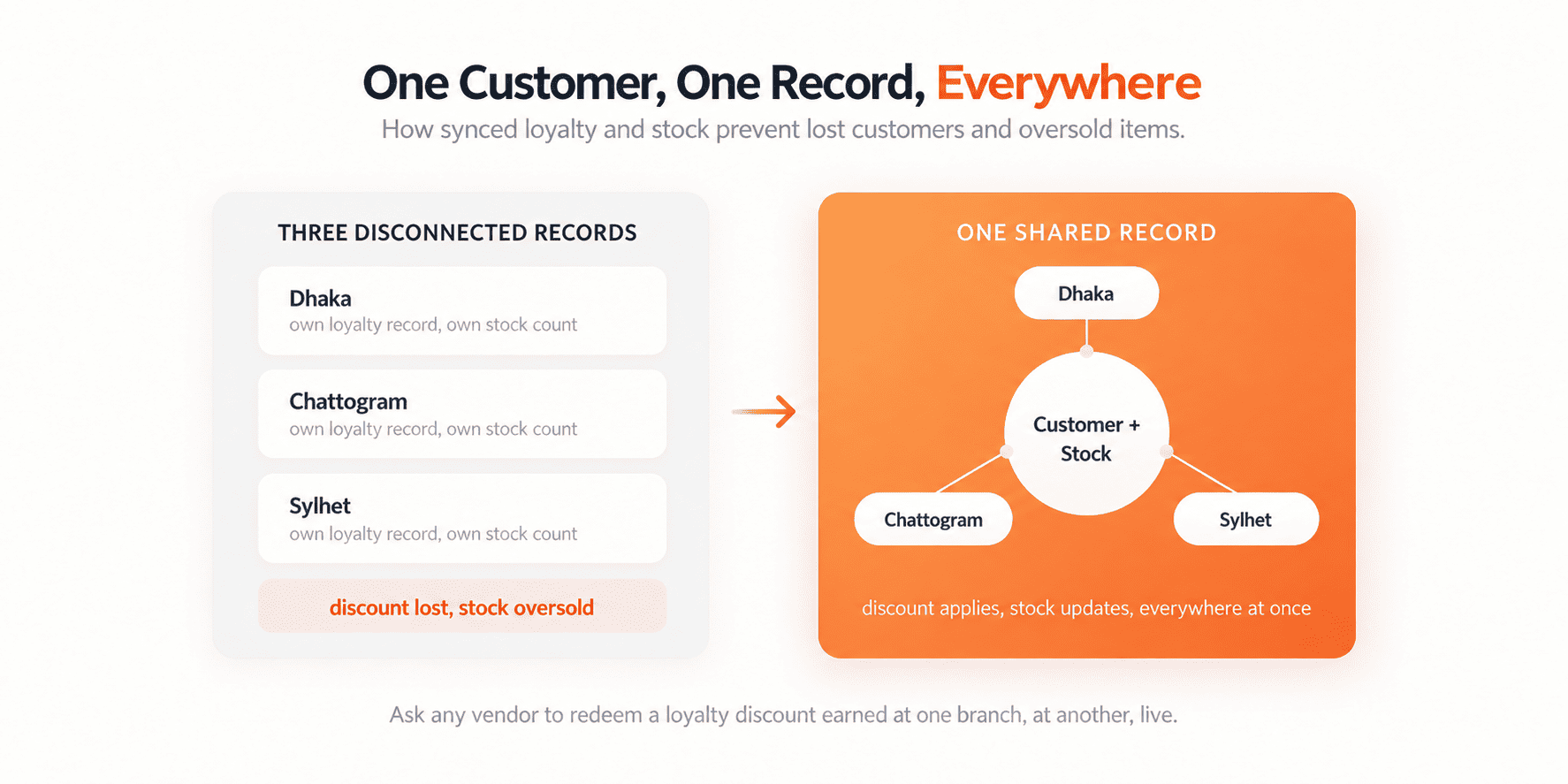
Cloud, on-premise, or offline, which fits a Bangladeshi retail business?
Most retail management software in Bangladesh is cloud-based, but deployment and offline behavior vary meaningfully by vendor, some keep working during an internet outage and sync later, others don't. Mediasoft can be deployed as either a desktop-based system or a server-based enterprise solution, and PridePOS explicitly offers both offline and online modes on the same cloud platform, two genuinely different answers to the same question.
Why this matters more at the checkout counter than almost anywhere else:
A retail shop's checkout is the one place in the business where a system going down has an immediate, visible cost, a customer standing at the counter with a full basket, unable to pay. Internet and power interruptions happen in Bangladesh, and a system that simply stops the moment the connection drops means every sale stops with it. A system built to keep processing locally and sync once reconnected avoids that entirely.
What to actually ask a vendor:
- Does the system keep processing sales if the internet drops mid-transaction, or does it stop entirely?
- If it works offline, does it sync automatically once reconnected, or does someone have to re-enter anything by hand?
- Is deployment cloud-only, or is on-premise or a hybrid desktop option genuinely available?
What should retail management software cost in Bangladesh?
Retail management software in Bangladesh typically costs ৳1,000 to ৳5,000 a month for a cloud-based subscription, or starts around ৳10,000 for a one-time license, with enterprise or heavily customized deployments running beyond ৳2,00,000. This is consistent with pricing for general POS software in Bangladesh, since most retail-specific systems are priced the same way, per outlet or per user, not by a separate "retail" pricing tier.
Why the range is this wide:
A single small shop with basic billing and stock tracking sits at the low end; a multi-branch chain needing centralized pricing, loyalty programs, supply chain management, and real-time inventory across locations sits much higher. Most vendors in this comparison don't publish a single fixed price, cost depends on branch count, user count, and which modules (loyalty, promotions, supply chain) you actually need. biznify is the exception, its tiers are published directly: ৳1,000/month for Basic (1 user), ৳1,500 for Standard, ৳2,000 for Premium.
What to actually ask before comparing prices:
- Is the price per branch, per user, or a flat rate regardless of size?
- Does it include barcode scanners, receipt printers, and other hardware, or is that separate?
- Is offline mode included by default, or a higher tier?
- What's the real cost of adding a second branch or a loyalty program later?
The best retail management software in Bangladesh, compared
| Rank | Software |
Best For |
Deployment |
Starting Price |
| 1 | ZAB Retail (Orange Solutions) | Multi-branch retailers wanting POS, inventory, pricing, supply chain, and loyalty connected in one system | Cloud, with offline and online mode | |
| 2 | PridePOS (Pridesys IT) | Garments, apparel, footwear, or multi-currency retail businesses wanting confirmed offline reliability | Cloud, with confirmed offline and online mode | Request a quote |
| 3 | Mediasoft | Retailers growing from a single outlet toward multiple branches, wanting one vendor across that path | Desktop-based or server-based, scales with business size | Roughly ৳1,000–5,000/month (industry range, not vendor-specific) |
| 4 | Smart Retail Management Software (Smart Software Ltd.) | Single shops or small retailers wanting fast setup with minimal configuration | Cloud/web-based with a mobile app | Request a quote |
| 5 | biznify (Softifybd Ltd.) | Retailers wanting transparent, published pricing and an ERP that includes accounting and payroll | Cloud SaaS, with an on-premise/own-server enterprise option | ৳1,000/month (Basic, 1 user), confirmed on biznify.net/pricing |
| 6 | AmarSolution | Super shops wanting a genuine choice between subscription and lifetime-purchase pricing | Cloud-based; offline capability advertised for some configurations | Request a quote |
ZAB Retail (by Orange Solutions)
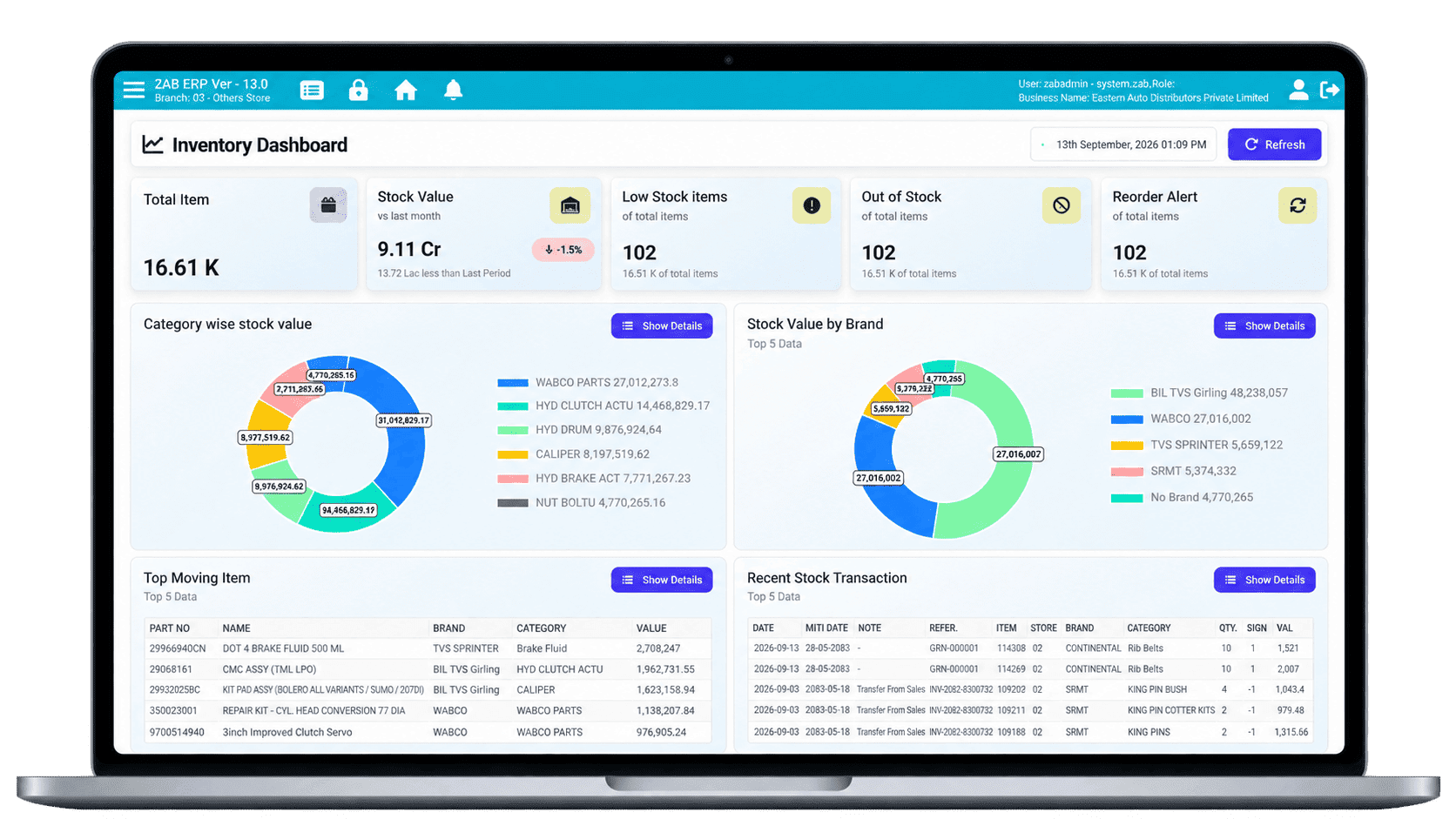
ZAB Retail is a retail management system built by Orange Solutions, covering point-of-sale, inventory, product and price management, supply chain, barcode management, multiple payment methods, day-end reconciliation, promotions and discounts, and membership and loyalty, according to Orange Solutions. It runs on the cloud with both offline and online modes, according to Orange Solutions. See our retail ERP guide for a fuller look at how ZAB Retail's modules map to day-to-day retail operations.
Why it leads this comparison:
Picture a clothing retailer running three outlets in Dhaka, Chattogram, and Sylhet. A customer buys a shirt in Dhaka using a loyalty discount earned from a purchase in Sylhet last month, the sale needs to recognize that customer, apply the right discount tier, deduct stock from the Dhaka branch specifically, and update the shared inventory count so Chattogram doesn't oversell the same item. That's the specific scenario ZAB Retail's module combination is built to handle, supply chain and inventory shared across branches, membership and loyalty tracked centrally, not per-outlet. Several vendors in this comparison offer POS and inventory as separate, connected modules; fewer combine that with a dedicated loyalty and membership system in the same package, which matters specifically for a multi-branch retailer trying to run one loyalty program, not three disconnected ones.
Offline mode matters at a different, more immediate moment, a customer at the till during a power cut. ZAB Retail and PridePOS are the only two vendors in this comparison with confirmed offline capability; the other four either don't state it or, like AmarSolution, only advertise it for some configurations, worth confirming exactly which.
Who it's for, and who it isn't:
ZAB Retail fits a retailer already juggling, or planning to juggle, multiple branches with shared stock and a single loyalty program, the exact scenario above. A single shop with one till and no loyalty program is paying for connective tissue, branch-to-branch inventory sync, centralized loyalty, it doesn't need yet; that business is better served starting smaller and moving up once a second branch is actually on the table.
Consider: pricing isn't published; request a quote directly, and ask specifically how the price changes between a single-branch and multi-branch setup, since that's where this system's real value, and cost, concentrates.
PridePOS (by Pridesys IT)
PridePOS is a cloud-based retail POS system built by Pridesys IT, the same company behind PrideERP, PridePOS's restaurant edition (covered separately in our restaurant software comparison), and PrideHealth. For retail specifically, it's built around barcode-driven inventory and price lookup, real-time stock updates, multi-currency support, and confirmed offline-and-online operation on the same platform.
What sets it apart:
Picture a boutique clothing shop that also sells to a handful of overseas customers, or a pharmacy handling both cash sales and insurance-linked transactions. PridePOS's specific, stated feature set covers exactly these edge cases where a generic POS starts to strain: multi-currency support for a business with any international sales, serial number tracking for goods that need individual traceability, gift cards and credit memos for return-heavy retail categories like fashion, and "parked inventory," holding a transaction mid-sale without losing it, useful for a busy counter where a customer steps away before paying. Pridesys' own materials explicitly name garments and textile, healthcare, and apparel or footwear as industries the system is built to adapt to, which matters if your retail business sits in one of those specific verticals rather than general merchandise.
The offline-and-online mode is confirmed directly on Pridesys' own product page, not a secondhand claim, putting it alongside ZAB Retail as one of only two vendors in this comparison with a stated answer to what happens when the connection drops mid-sale.
Offline mode matters at a different, more immediate moment, a customer at the till during a power cut. ZAB Retail and PridePOS are the only two vendors in this comparison with confirmed offline capability; the other four either don't state it or, like AmarSolution, only advertise it for some configurations, worth confirming exactly which. One real example of this system in practice: an apparel retailer used ZAB Retail to fix recurring inventory losses without re-tagging a single existing barcode, see the full case study.
Who it's for, and who it isn't:
PridePOS suits a retailer in garments, apparel, footwear, or a business handling multi-currency or serial-tracked goods specifically, where its named features solve a real, specific problem. A general grocery or convenience retailer with none of those needs won't get extra value from serial number tracking or multi-currency support, and may find a simpler system does the same core job.
Consider: pricing isn't published; request a quote directly. Because PridePOS is one product inside a larger Pridesys family (PrideERP, PrideHealth, and its own restaurant edition), ask directly how it integrates with other Pridesys tools if your business already uses, or is considering, one of them.
Mediasoft
Mediasoft is a retail POS and management system with an unusually direct answer to a question most vendors leave vague, it deploys as either a desktop-based system for a single outlet or a server-based enterprise solution for multiple branches, letting a business start small and move up without switching vendors.
What sets it apart:
Picture a shop owner who opens with one location, then two years later opens a second branch and a warehouse. With most systems, that growth means a real evaluation, does the vendor's product actually scale, or do you need to migrate to something else entirely. Mediasoft's own positioning addresses this directly: a single desktop-based install for the one-outlet stage, the same vendor's server-based enterprise version once multi-store management, multiple terminals, and multi-warehouse tracking become necessary. Its named feature set backs this up with retail-specific detail beyond the basics, damage and lost-product adjustment (a real, recurring cost in physical retail that generic POS systems often ignore), multiple currency support, and accurate VAT reporting built into its analytics dashboard.
Who it's for, and who it isn't:
Mediasoft suits a retailer who wants one vendor relationship across the full growth path, from a single till to a multi-branch, multi-warehouse operation, without re-platforming partway through. A retailer certain they'll stay single-location, or one that specifically wants a cloud-only system with no desktop option, may find the dual desktop-or-server model more choice than they need.
Consider: pricing isn't published by Mediasoft itself; the ৳1,000–5,000/month figure often cited for this category is a general industry range from third-party sources, not Mediasoft's own confirmed price, ask directly. Confirm whether the desktop-based version syncs with the server-based version if you're likely to grow from one to the other, rather than assuming that transition is automatic.
Smart Retail Management Software (by Smart Software Ltd.)
Smart Retail Management Software is a cloud and web-based system with a mobile app, built by Smart Software Ltd., the same company behind Smart POS, Smart Restaurant Management, and Smart Hotel ERP, all covered elsewhere in this series. It's positioned around ease of use and fast setup rather than deep customization.
What sets it apart:
Picture a shop owner who wants to be selling within days of signing up, not weeks into a configuration process. Smart Software's own materials lean into exactly that, a system built to be easy to learn and quick to implement, which is a genuine, real advantage for a small retailer without dedicated IT support who needs staff trained fast. That's a real trade-off worth naming plainly rather than glossing over: one competitor's own comparison of this market (biznify, a rival vendor, so read this as one company's view of another, not a neutral source) states that Smart Software "can handle basic retail operations" but "doesn't provide the same level of comprehensive business insights and support for multiple locations" that a deeper system offers. That's consistent with what's independently confirmed about the product, mobile app plus cloud, straightforward, fast to adopt, rather than described anywhere as built for complex multi-branch operations the way ZAB Retail or Mediasoft explicitly are.
Who it's for, and who it isn't:
Smart Retail Management Software suits a single shop or small retailer wanting to get running quickly with minimal setup, especially one already comfortable with Smart Software's other products. A multi-branch retailer needing deep, centralized reporting across locations should specifically ask how this system handles that, since neither the vendor's own materials nor independent sources describe multi-location depth as a named strength here.
Consider: pricing isn't published anywhere we could verify; request a quote directly. Deployment is confirmed as cloud/web-based with a mobile app, but offline behavior during an internet outage isn't stated anywhere we found, worth asking directly given how much this matters at a checkout counter specifically.
biznify (by Softifybd Ltd.)
biznify is a cloud ERP built by Softifybd Ltd., covering sales, POS, purchase, stock, manufacturing, payroll, and accounting in one system, with real, published pricing, ৳1,000/month for the Basic tier (1 user), ৳1,500 for Standard, ৳2,000 for Premium, confirmed directly on biznify.net/pricing.
What sets it apart:
Unlike every other vendor in this comparison, you don't have to request a quote to know what biznify costs, the pricing tiers are public, tied directly to user count, and a business can compare the real number against its own budget before ever talking to a salesperson. That transparency matters concretely for a small retailer deciding whether to even start the conversation. biznify's own materials also position it more as a full ERP than a retail-specific system, sales, POS, purchase, stock, manufacturing, payroll, and accounting together, with a specific, named feature most competitors here don't mention: GetCommerce integration, syncing an online store automatically with 25 ready-made templates, useful for a retailer already selling, or planning to sell, online alongside a physical shop.
Who it's for, and who it isn't:
biznify suits a retailer who wants transparent, predictable per-user pricing and values having accounting, payroll, and manufacturing available in the same system as POS, particularly one also running or planning an online store. A retailer wanting a system built specifically around retail workflows, rather than a general ERP with POS as one module among many, may find PridePOS's or ZAB Retail's retail-first design a closer fit.
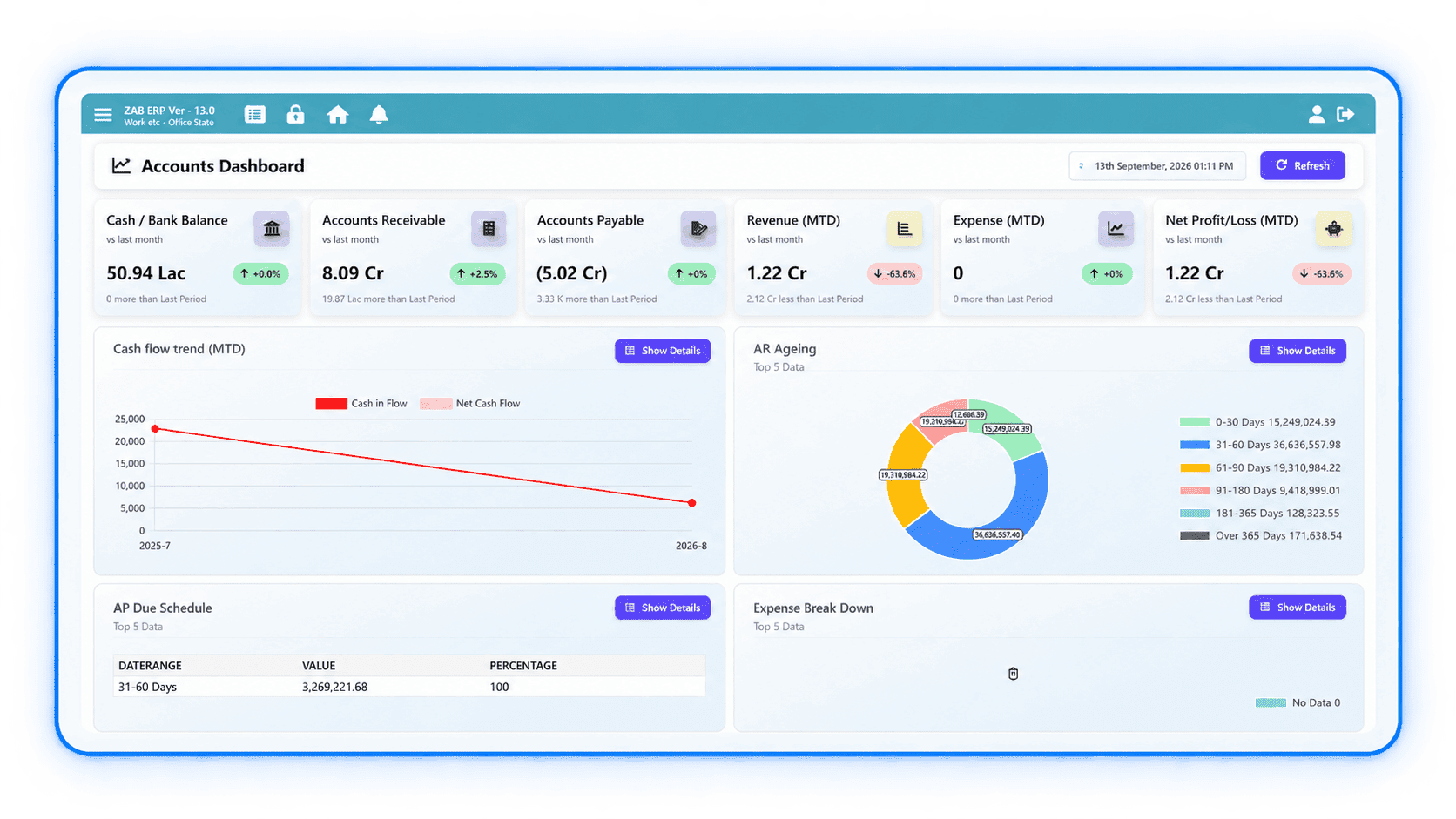
Consider: the published Basic tier is priced for a single user; confirm directly how the price scales once you add users or branches, since the public pricing page shows the entry point, not necessarily what a multi-branch retail operation would actually pay. Deployment includes both cloud SaaS and an on-premise or own-server enterprise option, ask specifically which tier that applies to.
AmarSolution
AmarSolution is a cloud-based POS and retail management system built by AmarSolution, the same company covered in our restaurant software comparison for its restaurant-specific product, with offline capability advertised for some retail configurations and both subscription and lifetime-purchase pricing models offered.
What sets it apart:
Picture a super shop owner comparing a monthly subscription against a one-time purchase, most vendors in this comparison only offer one model or the other; AmarSolution is one of the few naming both, a genuine, practical choice for a business trying to decide between lower upfront cost (subscription) and lower long-term cost if the business is stable and plans to run the same system for years (lifetime purchase). Its core focus, per its own materials, is inventory management and POS for super shops specifically, real-time stock tracking and sales processing at the counter. Worth stating honestly: the same competitor comparison referenced in Smart Software's entry above (biznify, a rival vendor, not a neutral source) states that AmarSolution "falls short in areas like real-time reporting and scalability for larger businesses." That's one company's view of a competitor, not independently confirmed, but it points to a real, specific question worth asking directly if your business is growing toward multiple branches.
Who it's for, and who it isn't:
AmarSolution suits a super shop or retailer wanting a straightforward inventory-and-POS system with a genuine choice between subscription and lifetime pricing. A retailer specifically planning multi-branch expansion with heavy reporting needs should ask pointed questions about scalability before committing, given the specific concern raised above, rather than assume it's covered.
Consider: pricing isn't officially published in exact figures; request a quote directly, and ask specifically about the lifetime-purchase option's total cost versus the subscription over a realistic multi-year period. Offline capability is advertised only "for some configurations," confirm exactly which setup you'd be getting before assuming it applies to yours.
Is there retail software built for specific verticals, like pharmacy or clothing?
Yes, to a degree. PridePOS names garments and textile, healthcare, and apparel or footwear businesses specifically as industries it's built to adapt to, and several other vendors in this broader market, covered in our POS software comparison, offer pharmacy-specific product lines. Not every general retail system handles vertical-specific needs, like serial-number tracking for footwear or batch and expiry tracking for a pharmacy, equally well.
What to ask if your business fits a specific vertical:
- Does the vendor name your specific industry, garments, pharmacy, electronics, as something they've built for, or would you be the first business of your kind on their system?
- For pharmacy specifically, does the system handle batch and expiry tracking, or only general inventory?
- For clothing or footwear, does it support variants, sizes, colors, as part of the same product record, or would you need a workaround?
Is supermarket management software different from retail management software?
Largely no, "supermarket software" and "retail management software" describe the same category in this market, and most vendors, including several in this comparison, market themselves under both terms interchangeably. Someone searching for software for supermarket use and someone searching for retail management software are typically looking at the same set of vendors. ZAB Retail, PridePOS, and Mediasoft are all positioned for supermarkets and general retail alike, the same underlying system, not a separate product.
Why a supermarket's real needs still matter, even if the software category doesn't change:
A supermarket typically runs more tills at once, handles a higher volume of daily transactions, and manages a much larger product catalog than a single boutique shop, real operational differences even when the software category is the same. That's less about needing a different kind of system and more about needing the multi-till, high-SKU-count end of what the vendors in this comparison already offer. ZAB Retail's own supply chain and multi-branch modules, and Mediasoft's server-based enterprise option for multi-outlet operations, both scale toward exactly this kind of volume.
What to ask if you specifically run a supermarket:
- How many concurrent tills or terminals does the system support without slowing down?
- Can it handle your full product catalog size, some systems are built and tested around a few hundred SKUs, not several thousand?
- Does customer loyalty tracking work the same way at high transaction volume as it does for a smaller shop?
Is my retail business ready for management software yet?
Most retail businesses in Bangladesh are ready for management software once the current process, a notebook, a spreadsheet, or memory, starts producing real errors: stock counts that don't match what's on the shelf, a price applied inconsistently between staff or branches, or a loyal customer's discount lost because nobody tracked it centrally. The readiness signal isn't the size of the shop, it's whether the current process is already breaking down the way it did in the multi-branch loyalty scenario described in the ZAB Retail entry above.
Signs you're ready:
- Stock counts are frequently wrong, discovered only when a customer wants something the shelf shows as available but isn't actually there.
- You're opening, or planning to open, a second branch, and have no way to keep pricing and inventory consistent between locations.
- You want to run a loyalty or membership program but currently track it, if at all, on paper or in someone's memory.
- Reconciling the day's sales against what's actually in the till takes real manual effort every closing.
Signs you might not be ready yet:
- Your current manual or spreadsheet process is small enough that one person tracks everything accurately without real errors.
- You're not yet sure which features you actually need, buying a full retail system with supply chain and loyalty modules before knowing that risks paying for capacity you won't use for a while.
- Nobody on staff has time in the next few weeks to actually learn a new system, a switch that isn't properly adopted causes more disruption than the manual process it replaced.
If most of the "ready" signs sound familiar, the evaluation steps below are the next move. If it's mostly the second list, there's no cost to waiting, a single shop running smoothly on a notebook doesn't need to fix a problem it doesn't have yet.
How do you evaluate a retail software vendor before signing?
Ask for a live demo that actually processes a sale and updates stock in real time, not the vendor's sample data, confirm in writing what happens during an internet outage, get the real total cost including how it scales with users or branches, and talk to an existing retail client close to your own size before signing anything.
The four steps that matter most for a retail business specifically:
- Demo a real sale, not sample data. Ask the vendor to scan or enter a real product from your own inventory, complete a sale, and show the stock count update live. This is where the actual connection between POS and inventory, or the lack of it, becomes visible.
- Get the internet-outage answer in writing. As this guide covers directly, only two of the six vendors compared here have a confirmed answer to what happens when the connection drops mid-sale. Ask every vendor this question specifically, and get the answer in writing before you commit, not a verbal reassurance.
- Get the real total cost, including how it scales. Only one vendor in this comparison publishes fixed pricing; for the rest, ask specifically how the price changes as you add users, branches, or modules like loyalty and supply chain, using the pricing structure from the cost section above as your framework.
- Talk to a reference retailer close to your own size and type. A multi-branch chain's experience tells you little if you run a single boutique, and a general retailer's experience differs from a pharmacy or fashion-specific business. Ask the reference what actually broke or took longer than expected during setup, and whether they'd choose the same vendor again.
Which retail software should you choose?
Choose based on your business type, growth stage, and how much you value confirmed offline reliability, not just the ranking above. A quick guide by situation:
- Multi-branch retailer wanting POS, inventory, supply chain, and a centralized loyalty program connected, with confirmed offline mode → ZAB Retail
- Garments, apparel, footwear, or a business needing multi-currency or serial-number tracking, with confirmed offline mode → PridePOS
- Growing from a single outlet toward multiple branches and want one vendor across that whole path → Mediasoft
- Single shop or small retailer wanting to get running quickly with minimal setup → Smart Retail Management Software
- Want transparent, published pricing you can compare before talking to a salesperson, especially with an online store to sync → biznify
- Super shop wanting a genuine choice between subscription and lifetime-purchase pricing → AmarSolution
- Business with unreliable internet, or checkout-counter outages are a real concern → ZAB Retail or PridePOS specifically; the other four haven't confirmed how they handle this
Whichever you're leaning toward, run it through the evaluation steps above, a live sale-and-stock demo, a written outage answer, the real total cost as it scales, and a reference retailer close to your own size, before signing anything.
FAQ
What is the best retail management software in Bangladesh?
There's no single best system, it depends on your business type, growth stage, and how much offline reliability matters to you. For most retail businesses, ZAB Retail is the strongest overall choice in this comparison; see the full ranked list above for other situations.
What's the difference between retail management software and retail inventory management software?
Retail management software is the broader category, POS, inventory, pricing, and reporting connected together. Retail inventory management software specifically focuses on stock tracking and control as its core function. If inventory is your main pain point rather than the full retail operation, see our inventory management software comparison for a dedicated look at that category.
What does good retail management software actually include?
At minimum, POS billing with barcode scanning, inventory management with real-time stock updates, basic pricing control, and day-end reconciliation. Larger or multi-branch retailers typically add supply chain management, promotions, and loyalty programs.
Is retail ERP software the same as retail management software?
Largely yes, the terms are used interchangeably by most vendors in this market. See the section above for when a real distinction, ERP extending into accounting or payroll versus a retail-first system, actually matters for your decision.
How much does retail management software cost in Bangladesh?
Typically ৳1,000 to ৳5,000 a month for a cloud subscription, or from ৳10,000 for a one-time license, with enterprise deployments running higher. biznify is the one vendor in this comparison with fully published pricing, ৳1,000 to ৳2,000 a month depending on tier; request a quote from the others directly.
Does retail POS software work without internet?
It depends on the vendor. ZAB Retail and PridePOS both have confirmed offline-and-online mode. AmarSolution advertises offline capability for some configurations, confirm which. The rest haven't stated this anywhere we found, ask directly before assuming.
Is there retail billing software for a small shop specifically?
Yes. Smart Retail Management Software is positioned around fast setup and ease of use, a reasonable starting point for a single small shop, while biznify's published Basic tier is priced specifically for a single user.
Is there a dedicated supermarket inventory management system, or does regular retail software work?
Regular retail management software covers this. None of the vendors in this comparison sell a separate "supermarket-only" inventory system, the same inventory modules that track stock for a boutique or a pharmacy handle a supermarket's larger catalog, the difference is scale, not category. See the section above on what to ask specifically about SKU count and multi-till support.
Does retail management software handle customer relationship management (CRM) for a supermarket?
To a degree. Membership and loyalty tracking, covered throughout this comparison, functions as customer relationship management in supermarket settings for most of these vendors, ZAB Retail's dedicated loyalty module is the most explicitly built for this. None of the six vendors here position themselves as a dedicated CRM platform first, so if deep customer-relationship features are your priority over inventory and billing, ask specifically how far the loyalty module goes beyond basic discount tracking.