
How ZAB POS Eliminated Lost Kitchen Orders | Restaurant Case Study
Industry: Food & Beverage — Multi-Outlet Restaurant Chain
Product: ZABPOS
Implementation type: Restaurant POS & Kitchen Display System (KDS)
Region: Bangladesh
Running a standalone quick-service counter or a neighborhood cafe is one thing. Managing an expanding, multi-outlet chain restaurant with simultaneous dine-in rushes, delivery aggregator orders from Foodpanda and Pathao, multi-station kitchens firing split KOTs, recipe-level raw material movement, and branch-to-branch stock transfers is a different problem entirely.
A basic cash register or a generic offline retail POS can balance a drawer and print a slip. Modern food service needs more than that: every five-minute delay in kitchen order routing frustrates a hungry dining room, and unmonitored recipe waste or untracked complimentary items quietly bleed margin in the background.
(Note: at the client's request, this restaurant chain is not named. What follows is a real implementation account — the specific problems, the technical fix, and the measured results with identifying details removed. If you're evaluating restaurant POS or kitchen display software in Bangladesh, this is what an actual multi-outlet rollout looked like.)
The Problem: What the Chain Was Dealing With Before ZABPOS
Before implementation, the chain ran on disconnected legacy desktop billing tools layered with manual paperwork and spreadsheets. As footfall grew and new outlets opened in prime commercial zones, that setup broke down under real pressure:
- Slow billing, counter bottlenecks. Staff relied on single-terminal desktop billing screens. During peak hours, that meant long queues and walkaways.
- Disconnected kitchen operations. Paper KOT slips were handwritten or printed at a single counter and carried to the kitchen by hand lost slips, unreadable modifications, zero prep visibility, delayed food.
- Queue chaos in the lobby. No visual order-token display for dine-in or takeaway, so customers crowded the counter just to ask "is it ready yet."
- Blind inventory, uncontrolled recipe wastage. No recipe-level stock tracking connecting the central warehouse to branch kitchens — raw materials disappeared without anyone able to trace yield loss or pilferage.
- Heavy paper receipt reliance. Thermal paper rolls, recurring printing costs, and no durable digital record for the customer.
- Pilferage risk, unauthorized discounts. No role-based security — cashiers could delete running items, cancel bills, or grant discounts with no manager sign-off and no audit trail.
- VAT and NBR compliance headaches. Manual calculation of Bangladesh's tiered VAT and Supplementary Duty rates led to inconsistent, audit-risky reporting.
- Offline vulnerability. Every internet drop halted operations entirely — no billing, no KOTs, incomplete day-end reconciliation.
- No multi-outlet visibility. Management had no central view of live branch sales, terminal collections, or footfall across locations.
This pattern tracks with what's documented at the category level: Bangladesh's VAT treatment of restaurants has itself been a moving target in recent years — the NBR reversed a proposed VAT hike on restaurants in 2024 after industry pushback, keeping the rate at 5% — which is exactly the kind of regulatory shift a manual, spreadsheet-based tax process struggles to keep up with.
The Fix: Implementing ZABPOS Restaurant POS & Management System
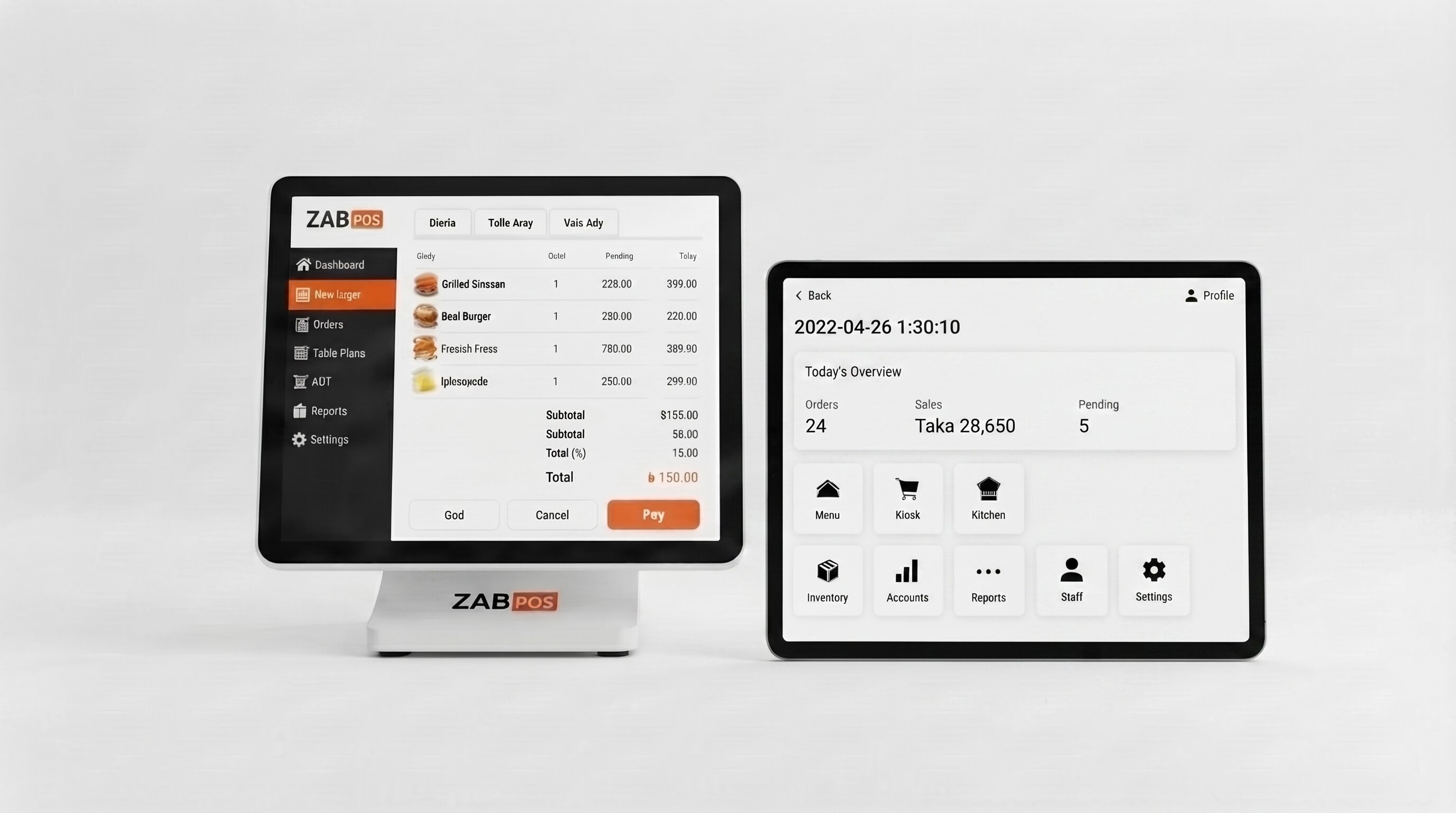
To eliminate these bottlenecks, the Orange Solutions team deployed ZABPOS, an enterprise-grade restaurant management and POS system built for fine dining, casual dining, food courts, and multi-outlet chain operations in Bangladesh. Here's how the implementation unified the chain's operations:
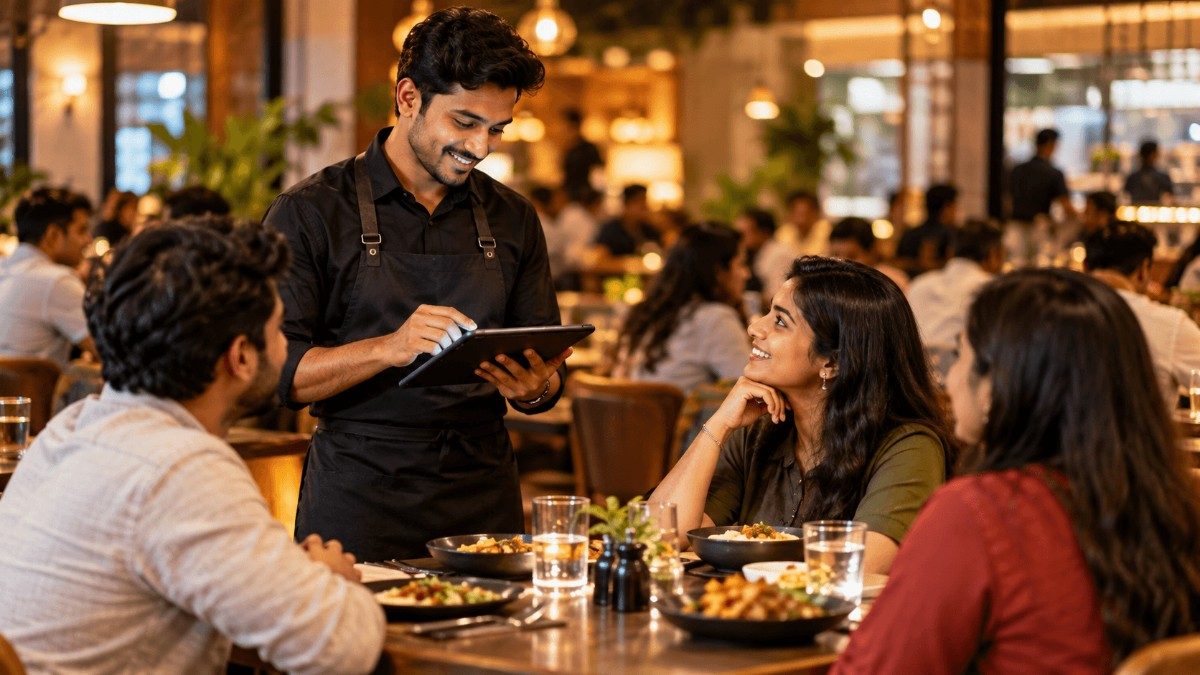
- Multi-device omnichannel order-taking. Servers now take orders tableside on Android phones or tablets running the ZABPOS Order Take app. Fast-casual outlets added self-ordering kiosks and QR scan-and-order, letting customers order and pay independently — cutting counter lines by over 60%.
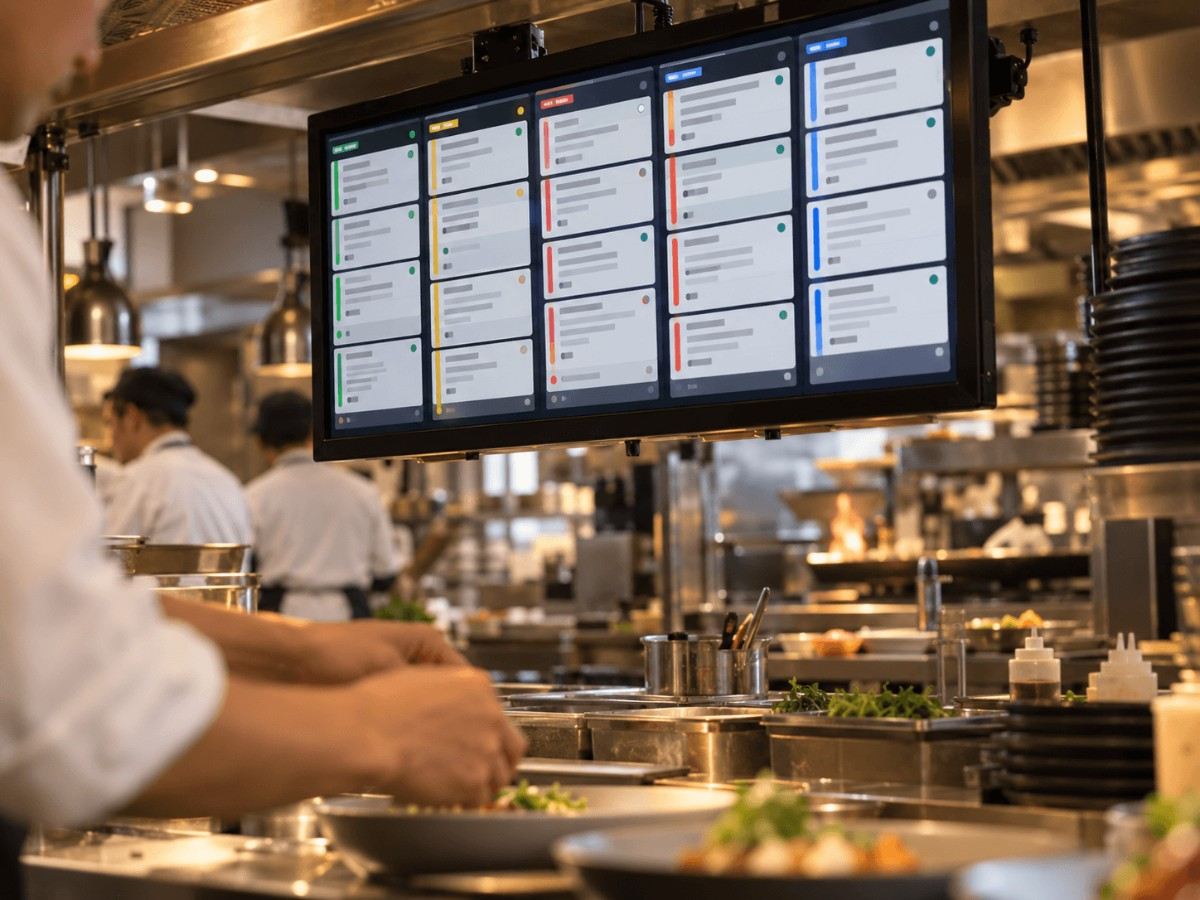
- Kitchen Display System (KDS) and multi-station KOT routing. Paper tickets were replaced with digital Kitchen Display Systems and multi-printer KOT routing. Orders split automatically to the right prep station (grill, bar, dessert, main kitchen) in real time, with color-coded ticket-aging alerts so nothing sits forgotten.
Implementation note: a KDS isn't just a screen replacing paper — it's a routing layer. When an order is placed, ZABPOS splits it by recipe category and sends each piece directly to the station responsible for it, tracking how long each ticket has been open and flagging it visually as it ages. This is the same underlying approach used by established KDS platforms globally: the gain isn't digitizing the ticket, it's making ticket age and routing visible to the kitchen in real time, which is what paper never could do.
- Customer Display System (CDS) and smart queue management. Digital token screens in the dining and pickup lobbies now show live order status — preparing, ready for pickup, table dispatched — eliminating counter congestion and the need to shout out order numbers.
- Smart digital invoicing via SMS and WhatsApp. Alongside standard thermal printing, customers now get a branded, itemized digital receipt by SMS or WhatsApp — an eco-friendlier experience that also captures contact data for CRM loyalty campaigns.
- Offline-first reliability with instant cloud sync. ZABPOS runs on a hybrid offline-first architecture. If local internet drops, cashiers keep billing, taking orders, and firing KOTs locally without interruption; the moment connectivity returns, everything syncs to the cloud automatically.
- NBR VAT and Supplementary Duty compliance. ZABPOS comes pre-configured with an NBR-compliant tax engine, automatically applying the correct VAT and SD rates, printing compliant invoices, and generating one-click monthly VAT return reports — removing the manual calculation that was previously a recurring audit risk.
- Visual floor and table management. Floor managers see an interactive map of occupied, vacant, and reserved tables with running orders and elapsed dining time, for faster seating decisions.
- Role-based security and anti-theft controls. Bill voids, item deletions after a KOT has printed, manual price changes, and complimentary giveaways now require manager authorization or OTP approval — closing the gap that let revenue quietly leak at the till.
- Integrated recipe and inventory automation. Every menu item is linked to a standard recipe (bill of materials). Raw material consumption — in grams, kilograms, ounces, boxes, or dozens — deducts automatically at bill settlement, alongside branch-to-branch transfers and central warehouse purchase tracking.
- Centralized multi-outlet cloud dashboard. Management can check live sales, gross margins, payment-method breakdowns (cash, card, bKash/Nagad, delivery aggregators), and branch performance across every location from any mobile browser.
The Result: What Changed After Implementation
- Counter lines cut by over 60% — multi-device ordering (mobile POS, tablets, kiosks) removed the single-terminal bottleneck during peak hours.
- Zero lost kitchen orders — digital KDS and split KOT routing eliminated paper clutter and cut kitchen prep time by roughly 40%.
- A calmer dining and pickup lobby — Customer Display Screens replaced shouted order numbers with a visible queue.
- Modern digital touchpoints — instant WhatsApp/SMS receipts, lower paper costs, and a captured contact channel for repeat-customer marketing.
- Zero downtime during connectivity drops — the offline-first architecture kept billing and KOT firing running through local broadband outages.
- Closed billing leaks — mandatory manager OTP on voids, plus automatic recipe-based inventory deduction, removed the two biggest informal leak points at the till.
- Faster, lower-risk branch expansion — centralized 24/7 oversight means opening a new outlet no longer means opening a new operational blind spot.
(Percentages reflect internal comparisons of the chain's operational data from before and after go-live, provided by the client for this case study. Figures are not independently audited but are consistent with the process changes described above.)
Before vs. After ZABPOS
| Feature Dimension | Before (Legacy System) | After ZABPOS |
| Restaurant Ordering | Fixed desktop counter only; long lines |
Omnichannel: mobile POS, tablets, kiosks, QR menus |
| Kitchen Workflow | Lost paper slips, verbal yelling, delayed cooking | Digital KDS with automated, multi-station split KOT routing |
| Customer Queue | Crowded counters, verbal name-calling | Customer Display System (CDS) token screens |
| Billing & Invoicing | Slow, paper-only thermal receipts | Instant billing plus Smart Invoicing via SMS/WhatsApp |
| Tax & Compliance | Manual, error-prone VAT/SD calculation | Automated NBR-compliant VAT/SD and audit-ready reports |
| Connectivity | Full operational halt on internet drop | Offline-first billing with automatic cloud sync |
| Floor Management | Guesswork on table occupancy |
Visual interactive table layout, real-time status |
| Internal Security |
Unchecked voids, unauthorized discounts |
Role-based permissions, manager OTP on sensitive actions |
| Multi-Outlet & Stock | Isolated spreadsheets, unaccounted losses | Centralized dashboard, automated recipe-level deductions |
ZABPOS Package Structure
ZABPOS scales in three tiers, whether you're running a single café or an enterprise chain:
- Classic (POS & Core Operations): high-speed billing, discount management, multi-kitchen KOT routing, basic CMS, and online sales reporting — built for single-outlet or growing casual dining.
- Premium (POS + Multi-Outlet Inventory): everything in Classic plus full inventory control, central outlet management, branch transfers, KDS, customer token displays, and MIS dashboards — built for multi-branch dining brands.
- Professional (Complete Restaurant ERP): full ERP capability — automated recipe production, GL/AP/AR financial accounting, centralized purchasing, standard food costing, NBR VAT compliance, and balance sheets — built for enterprise restaurant groups and cloud kitchens.
Frequently Asked Questions
What's the difference between a kitchen display system (KDS) and just digitizing paper tickets?
A KDS doesn't just replace paper with a screen — it routes each item to the correct prep station automatically (grill, bar, dessert, etc.) and tracks how long each ticket has been open, flagging aging orders visually. That routing and aging-visibility is what actually reduces lost or delayed orders, not the screen itself.
Does a restaurant POS still work if the internet goes down?
With an offline-first architecture like ZABPOS, yes — billing, order taking, and KOT firing continue locally without interruption, and all data syncs automatically to the cloud once connectivity returns. This matters specifically in markets with less consistent broadband, where a cloud-only POS can mean a full stop at the till during an outage.
How does a restaurant POS handle Bangladesh's VAT and Supplementary Duty rules?
A properly configured system applies the correct NBR-mandated VAT/SD rate automatically at the point of sale and generates audit-ready reports, rather than relying on staff to calculate rates by hand. Given that restaurant VAT rates in Bangladesh have changed more than once in recent years, an automated tax engine also reduces the risk of a rate change slipping through unnoticed.
Is this level of automation only worth it for large restaurant chains?
The core problems — lost paper tickets, no queue visibility, manual tax calculation, unchecked bill voids — start appearing as soon as a business runs more than one till or opens a second location, not only at large scale. ZABPOS's tiered packages reflect that: a single growing outlet can start on Classic and move up as it expands.
Ready to Fix Counter Bottlenecks, Lost Orders, or Multi-Outlet Blind Spots?
If your restaurant or chain is dealing with any of the problems described above — slow counters, lost kitchen tickets, manual VAT headaches, or no central visibility across branches — Orange Solutions can walk you through how ZABPOS would fit your operation.
You can also see our broader take on the category here: Best Restaurant Management Software in Bangladesh.
Book a free consultation with the Orange Solutions team See how ZABPOS works